
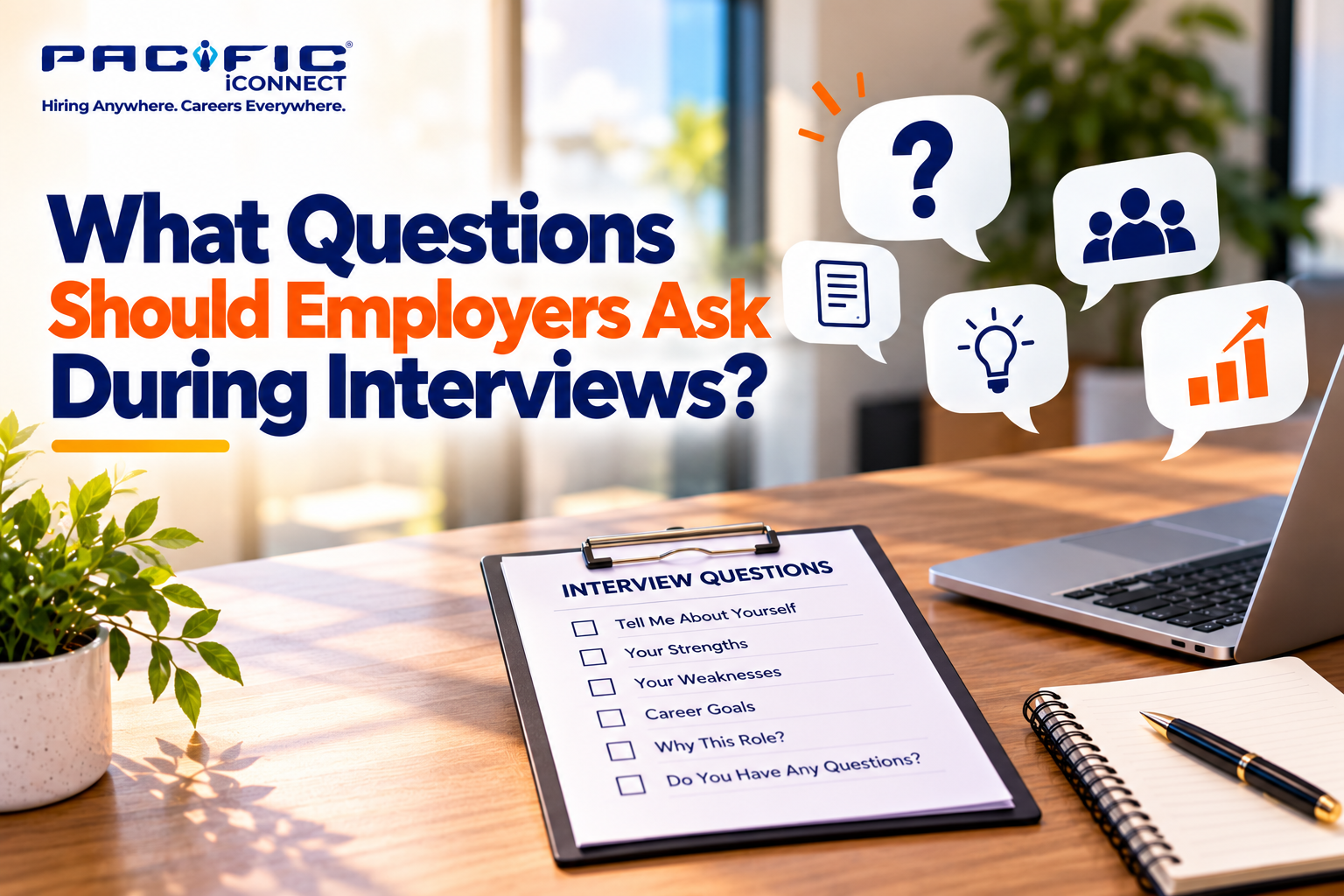
Preparing for a job interview can feel challenging, especially when you do not know what the interviewer will ask. Whether you are a fresher attending your first interview or an experienced professional looking for a better opportunity, understanding common interview questions can help you prepare more effectively.
Interviewers may ask about your background, skills, previous work experience, career goals, and approach to workplace situations. They may also ask questions specific to the job you are applying for.
Although the exact questions vary between companies and roles, preparing for common interview topics can help you explain your abilities clearly and confidently.
In this guide, you will learn about the questions employers commonly ask during interviews, why these questions matter, and how you can prepare practical answers.
1. Tell Me About Yourself
This is one of the most common opening questions in job interviews. It gives you an opportunity to introduce your background, relevant skills, and career interests.
Instead of explaining your entire life story, focus on information related to the position.
How to answer
Follow this simple structure:
- Introduce yourself and your educational or professional background.
- Mention two or three relevant skills or achievements.
- Explain why you are interested in the role.
Example for freshers:
“I recently completed my graduation in commerce. During my studies, I developed an interest in accounting and financial management. I am comfortable working with spreadsheets, enjoy learning new tools, and am looking for an opportunity to apply my knowledge in a professional environment.”
Example for experienced professionals:
“I have three years of experience in customer support, where I have handled customer queries, resolved complaints, and maintained service records. I have developed strong communication and problem-solving skills and am now looking for a role where I can take on greater responsibilities.”
Keep your introduction relevant and practise it so it sounds natural rather than memorised.
2. Why Do You Want to Work Here?
Interviewers may ask this question to understand whether you have researched the company and considered how the position fits your career goals.
A general answer such as “I need a job” may not explain your interest in the particular opportunity.
How to answer
Before your interview, learn about the company's services, industry, role requirements, and publicly available information about its work culture.
Then connect one or two relevant points with your own interests.
Example:
“I am interested in this position because the responsibilities match my experience in digital marketing. I would like to use my skills in content creation and SEO while continuing to develop my understanding of digital marketing strategies.”
Avoid making claims about a company's culture or working conditions unless you have a reasonable basis for them.
3. What Are Your Strengths?
This question gives you an opportunity to explain which abilities help you perform well at work.
Choose strengths that are relevant to the job rather than listing every positive quality you can think of.
Examples include:
- Communication
- Time management
- Problem-solving
- Attention to detail
- Teamwork
- Adaptability
- Organisation
How to answer with an example
If you say that time management is your strength, explain how you use it.
Example:
“One of my strengths is time management. During my previous role, I had to manage several content deadlines at the same time. I organised tasks according to priority and used a tracker to monitor progress, which helped me complete the work on schedule.”
A specific example makes your answer more meaningful. Choose a real situation from your work, studies, internship, or projects.
4. What Is Your Weakness?
This question can be uncomfortable because you may worry that an honest answer will reduce your chances of getting the job.
You do not need to claim that you have no weaknesses. Instead, identify a genuine area for improvement and explain what you are doing to address it.
Example:
“I used to feel nervous while speaking in front of a group. I have been working on this by participating more actively in team discussions and practising presentations.”
Choose an improvement area that you can discuss honestly. Avoid giving an answer that suggests you cannot perform an essential responsibility of the position.
5. Why Should We Hire You?
This question allows you to connect your qualifications and skills with the requirements of the role.
Rather than comparing yourself with other candidates, explain what you can contribute.
How to prepare
Review the job description and identify its main requirements. Think about which of your skills, experiences, or achievements demonstrate that you can handle those responsibilities.
Example:
“My experience in customer communication, complaint handling, and record management matches several requirements of this position. I am organised, comfortable working with customers, and willing to learn the company's processes.”
Freshers can focus on relevant coursework, internships, projects, transferable skills, and willingness to learn.
6. Tell Me About a Challenge You Faced at Work
Interviewers may ask situational or behavioural questions to understand how you approach problems, manage responsibilities, and learn from experience.
If you are a fresher, you can use an example from a college project, internship, volunteer activity, or group assignment.
A useful way to structure your answer is the STAR method:
- Situation: Explain the background.
- Task: Describe what you needed to accomplish.
- Action: Explain the steps you took.
- Result: Share the outcome or lesson learned.
Example:
“During a college project, our group was falling behind because tasks were not clearly divided. I suggested assigning responsibilities according to each person's strengths and setting smaller deadlines. We tracked our progress through regular discussions and completed the project before the final submission date.”
Use a real example and explain your own contribution clearly.
7. Why Are You Leaving Your Current Job?
This question is more common for working professionals. The interviewer may want to understand your career goals and reasons for considering a change.
You can discuss professional growth, new responsibilities, skill development, a change in career direction, or other genuine reasons.
Example:
“I have learned a lot in my current position and appreciate the experience. I am now looking for an opportunity that allows me to take on broader responsibilities and develop my skills further.”
If you are leaving because of workplace difficulties, keep your explanation professional and factual. Avoid turning the interview into a complaint about your previous employer.
If you are a fresher, you can prepare for a related question about why you chose your career path or what you hope to learn in your first job.
8. What Are Your Salary Expectations?
Salary questions are an important part of many interviews in India. Your answer should reflect the role, your experience, relevant skills, location, and available market information.
Before the interview:
- Research salary ranges for similar positions.
- Consider your experience and specialised skills.
- Decide on a reasonable range based on your research.
- Understand the difference between CTC, gross salary, and in-hand salary.
Example:
“Based on the responsibilities of the position and my experience, I am looking for a salary in the range of ₹X to ₹Y per annum. However, I am open to discussing the overall compensation and responsibilities.”
Replace the placeholders with a range appropriate to your circumstances.
Freshers can consider the salary information shared in the job description and ask for clarification if the compensation structure is not clear.
9. Where Do You See Yourself in Five Years?
This question gives you a chance to discuss your professional direction and how you hope to develop your skills.
You do not need to predict your entire career. Explain the kind of progress you would like to make.
Example:
“Over the next few years, I would like to strengthen my technical skills, gain practical experience, and become capable of handling more complex responsibilities in my field.”
Make your answer realistic and relevant to the position. You can discuss learning, specialisation, leadership responsibilities, or professional development, depending on your goals.
10. Do You Have Any Questions for Us?
An interviewer may give you time to ask questions before the discussion ends. Preparing a few relevant questions can help you understand the position and make an informed decision.
You could ask:
- What would my main responsibilities be during the first three months?
- What training or onboarding is provided?
- How will performance be evaluated?
- What are the next steps in the selection process?
- Could you explain the working hours and weekly-off policy?
You do not need to ask every question on the list. Choose the ones that have not already been answered during the interview.
You can also clarify salary structure, location, shifts, travel requirements, or other practical details when relevant.
How to Prepare for Interview Questions Step by Step
Knowing common questions is useful, but practising your answers is equally important.
Step 1: Read the job description
Identify the main responsibilities, required skills, qualifications, and experience mentioned in the vacancy.
Step 2: Prepare relevant examples
Think of real situations that demonstrate your skills. Freshers can use academic projects, internships, training, or extracurricular activities where appropriate.
Step 3: Practise speaking aloud
Prepare brief notes instead of memorising every sentence. Practising aloud can help you organise your thoughts and identify answers that sound unclear.
Step 4: Research the company
Review its official website, services, and other reliable public information. Prepare a clear reason for your interest in the position.
Step 5: Prepare for practical details
Confirm the interview time, location or online meeting link, required documents, and contact information. For an online interview, test your internet connection, camera, and microphone.
Step 6: Review your resume
Be ready to explain the experience, skills, projects, qualifications, and achievements listed on your resume. Make sure your answers are consistent with the information you have provided.
Common Interview Challenges and How to Handle Them
If you do not know the answer: Stay calm. Explain what you understand and, where appropriate, describe how you would find the solution. Avoid pretending to know something you do not.
If you become nervous: Pause briefly, take a breath, and organise your thoughts before responding. It is acceptable to take a moment to understand a question.
If you have limited experience: Connect your existing skills with the job requirements. Use examples from education, internships, training, or personal projects without overstating your experience.
If a question is unclear: Politely ask the interviewer to clarify or repeat it.
If you need time to think: You can say, “Let me take a moment to organise my thoughts.” A thoughtful answer is more useful than a rushed response.
Conclusion
Understanding the questions employers may ask during interviews can help you prepare answers that are clear, relevant, and supported by real examples. Focus on your introduction, strengths, weaknesses, career goals, problem-solving abilities, salary expectations, and questions about the role.
Most importantly, treat interview preparation as a way to communicate your actual skills and understand the opportunity—not as an exercise in memorising perfect answers.